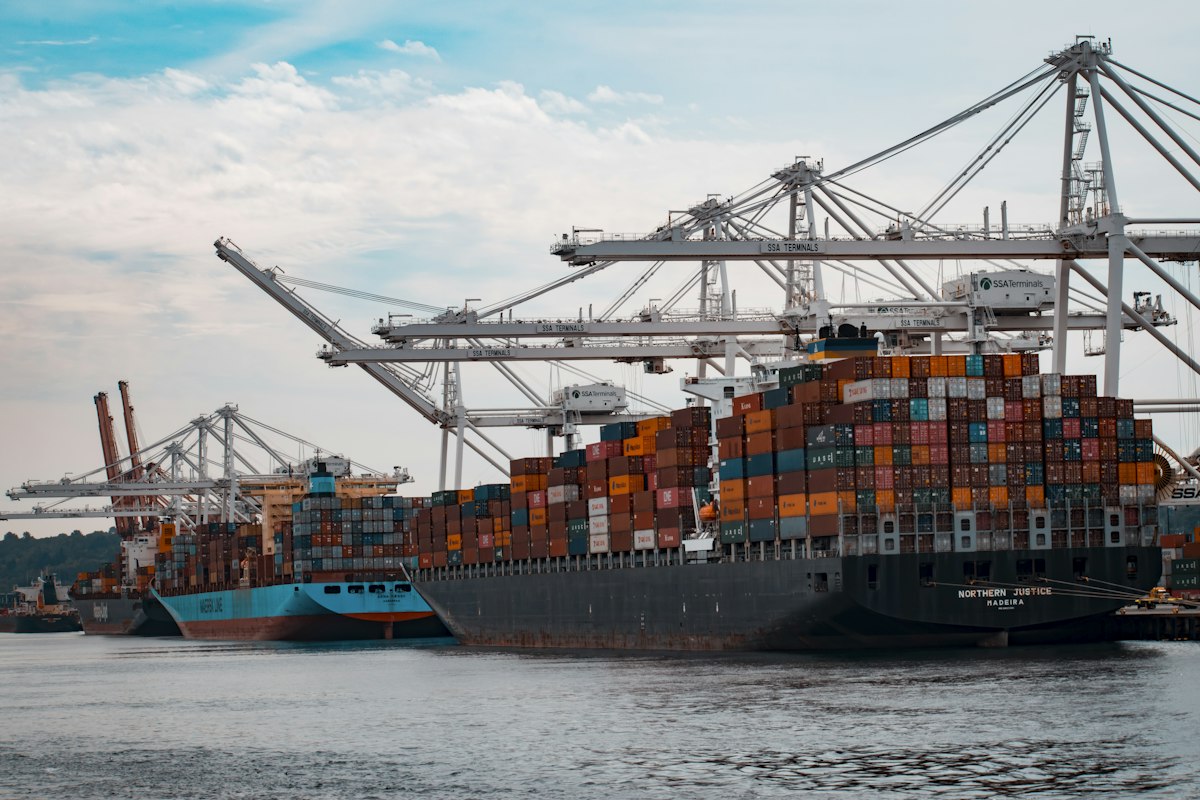
One year ago today, President Trump stood in the White House Rose Garden and signed Executive Order 14257, declaring April 2 “Liberation Day.” The sweeping tariffs he announced—a 10% baseline on nearly all imports, with rates reaching 145% on Chinese goods—were supposed to rebirth American manufacturing and make the country wealthy.
For the AI industry, the year that followed has been anything but liberating. GPU prices climbed 12-18%, data center construction costs ballooned, and more than a thousand small AI startups found themselves priced out of frontier compute entirely.
The Numbers Tell the Story
The broad economic results of Liberation Day have been grim. Manufacturing shed 89,000 jobs by February 2026, with the ratio of manufacturing workers to total employment hitting its lowest point since 1939. The goods trade deficit—the very thing tariffs were supposed to fix—rose 2% to $1.24 trillion. Imports hit $3.4 trillion, up 4% from 2024.
Tariff policy changed more than 50 times between the original announcement and February 2026. As Tax Foundation economist Erica York put it: “There was just no way for businesses to plan.”
Then in February, the Supreme Court struck down the tariffs in a 6-3 decision, ruling that IEEPA didn’t give the president authority to impose them. Chief Justice Roberts wrote that two words buried in the statute—“regulate” and “importation”—“cannot bear such weight.” The government now faces a $166 billion refund bill by mid-April.
GPUs Got Expensive Fast
The AI industry relies on a supply chain that stretches from Taiwan to Southeast Asia to Mexico and back. Every link in that chain got taxed.
Nvidia raised prices 10-15% across its entire lineup, from consumer RTX 5090 cards to data center H200 chips. Actual retail prices jumped 12-18%, with some models increasing $300 overnight. Tariffs added roughly 25% to the manufacturing cost of GPUs assembled in China—for a $1,000 graphics card, that’s $250 in tariff costs.
The semiconductor tariff math was brutal. A proposed 100% tariff on chips could have raised AI server costs by 75%. Even the tariffs that did take effect—25% on some high-end chips like the H200—pushed hardware procurement costs up 10-20% for AI startups in Q1 2026 compared to the previous quarter.
The damage wasn’t limited to chips. Cooling systems, backup generators, networking equipment, and construction materials for data centers faced tariffs too, representing 25-30% of total data center costs. Over 80% of large power transformers are imported, and the tariffs hit them on top of existing shortages.
The $3 Trillion Buildout Under Threat
Google, Amazon, Meta, and Microsoft planned to spend roughly $350 billion on AI data centers in 2025 alone, part of a projected $3 trillion buildout over three years. Tariffs threatened to add $75-100 billion in extra costs over five years—the equivalent of 15-20 hyperscale facilities that won’t get built.
CBRE estimated tariffs raised commercial construction costs 3-5%. For a sector building some of the most expensive facilities on the planet, even small percentages translate to billions. Electrical systems alone represent 40% of data center infrastructure spending, and the raw materials—steel, aluminum, copper—were all directly targeted.
The biggest companies absorbed the hit. They had to. The AI race doesn’t pause for trade policy. But the ripple effects reached further down the food chain.
Small Labs, Big Problems
More than 1,000 smaller AI labs operate with annual budgets under $10 million. When AI server costs rise 50-75%, these companies get priced out of frontier compute entirely. They can’t negotiate the bulk deals that hyperscalers get. They can’t shift assembly to domestic facilities on a dime. They can’t simply eat tens of millions in additional costs.
As CSIS researcher Philip Luck wrote: “The United States cannot simultaneously demand faster, cheaper AI infrastructure and pursue policies that make its core components more expensive.”
This created what some analysts called a “concentration dynamic”—the tariffs widened the gap between the handful of companies that could afford to build competitive AI infrastructure and everyone else. Innovation from smaller players, university labs, and open-source communities got squeezed.
Teams building their own inference infrastructure reported budgeting 15-25% more for equivalent hardware. For a startup trying to compete with OpenAI or Google on a shoestring, that’s the difference between viable and dead.
The Supreme Court Ruling Changed Everything (Sort Of)
The February 2026 Supreme Court decision should have been a reset button. Roberts’ majority opinion was unambiguous: IEEPA “contains no reference to tariffs or duties” and “until now no President has read IEEPA to confer such power.”
But the practical aftermath has been messy. The government owes roughly $166 billion in refunds—about half of all tariff revenue collected since Liberation Day. The mechanism for those refunds remains unclear, and companies that passed tariff costs to customers won’t necessarily pass refunds back.
Meanwhile, tariffs imposed under other authorities—Section 232 steel and aluminum tariffs, the 25% semiconductor tariffs enacted in January 2026—remain in effect. The patchwork nature of trade policy means some costs went away while others stayed.
For the AI industry specifically, the January 2026 semiconductor tariffs (imposed under different legal authority than IEEPA) still apply. The 25% tariff on high-end chips like the H200 was designed to push manufacturing toward U.S. soil, and TSMC’s $100 billion Arizona expansion suggests it’s working—albeit at a cost that gets passed to everyone buying compute.
What This Means
A year of tariff chaos accomplished something no regulation could: it made the AI industry’s dependence on global supply chains impossible to ignore. Every GPU, every transformer, every cooling system connects American AI ambitions to factories in Taiwan, assembly lines in Mexico, and rare earth mines in China.
The Supreme Court took the most sweeping tariffs off the table, but the underlying tension hasn’t gone away. Senator Blackburn’s Trump America AI Act, introduced in March, and the White House’s federal AI framework both signal that Washington wants to reshape the AI industry—they just haven’t figured out how without breaking it.
The companies that weathered the tariff year best were the ones with diversified supply chains, domestic manufacturing relationships, and enough cash to ride out uncertainty. Everyone else is still catching up.
What You Can Do
If you’re running AI infrastructure or building products that depend on GPU compute:
- Watch the refund timeline. The $166 billion in IEEPA tariff refunds could affect hardware pricing over the coming months. If you locked in contracts during the tariff period, check whether your vendors are passing savings through.
- Diversify your compute sources. The tariff year proved that concentrating on a single cloud provider or hardware vendor is risky. Multi-cloud strategies and spot instance markets offer some insulation.
- Track the semiconductor tariffs. The January 2026 chip tariffs survived the Supreme Court ruling. These are the ones still directly affecting GPU and AI accelerator costs.
- Budget for continued uncertainty. Tariff policy changed 50+ times in a year. Even with the IEEPA tariffs struck down, new trade actions are always possible. Build 15-20% buffer into hardware procurement budgets.
- Consider local and open-source alternatives. Running models locally on consumer hardware avoids the cloud pricing chain entirely. Smaller, efficient models like Llama and Mistral variants can run meaningful workloads without enterprise GPU infrastructure.