Moonshot AI made the full Kimi K3 weights public on July 27, 2026, turning the model from an API story into an open-weight one. The card describes K3 as “the world’s first open 3T-class model,” a 2.8-trillion-parameter mixture-of-experts with 104 billion active parameters and a one-million-token context window (Hugging Face model card). For readers who follow open weights, the immediate questions are honest ones: how big is too big to actually run, and what does the license quietly require? It is also a sharp escalation from Kimi K2.6’s earlier trillion-parameter release, and it lands in a year where the open-weight frontier has been catching the closed one, as our coverage of the three-month gap closing with GLM-5.1 already noted.
What landed
The release is a complete open-weight package. The repository ships the full BF16 and MXFP4 checkpoints, a MoonViT-V2 vision encoder (401 million parameters), 12 community quantizations, and seven derivative fine-tunes, alongside vLLM, SGLang, and TokenSpeed serving recipes (Hugging Face model card; vLLM recipes). An API version is also live on the Kimi platform, so the same weights can be hit through platform.kimi.ai without any local hardware at all (Kimi blog).
The architecture itself is the more interesting part. K3 mixes 69 Kimi Delta Attention (KDA) layers with 24 Gated MLA attention layers across 93 total layers, and routes each token through 16 of 896 experts plus 2 shared experts over a 160K vocabulary (Hugging Face model card). The blog frames the design as a 2.5x scaling-efficiency improvement over K2, with quantization-aware training baked in from the supervised fine-tuning stage (Kimi blog). Moonshot also contributed a KDA-compatible prefix-caching implementation to vLLM, which is the kind of infrastructure gift that often decides whether a release is usable in practice.
K3 is multimodal. It handles text and images natively, with the model card noting it “also understands video,” and it ships with thinking mode permanently on (Hugging Face model card). On Moonshot’s reported benchmarks, K3 “max” posts a 93.5 on GPQA Diamond, 91.2 on BrowseComp, 88.3 on Terminal-Bench 2.1, and 94.5 on MCPMark-Verified - numbers that put it ahead of most open peers in the report (Hugging Face model card). The blog is candid about the ceiling: K3 “still trails the most powerful proprietary models, Claude Fable 5 and GPT 5.6 Sol,” while claiming it “consistently outperforms other tested models” (Kimi blog). Those are Moonshot’s numbers, not independent results, and they should be read as such.
The hardware reality
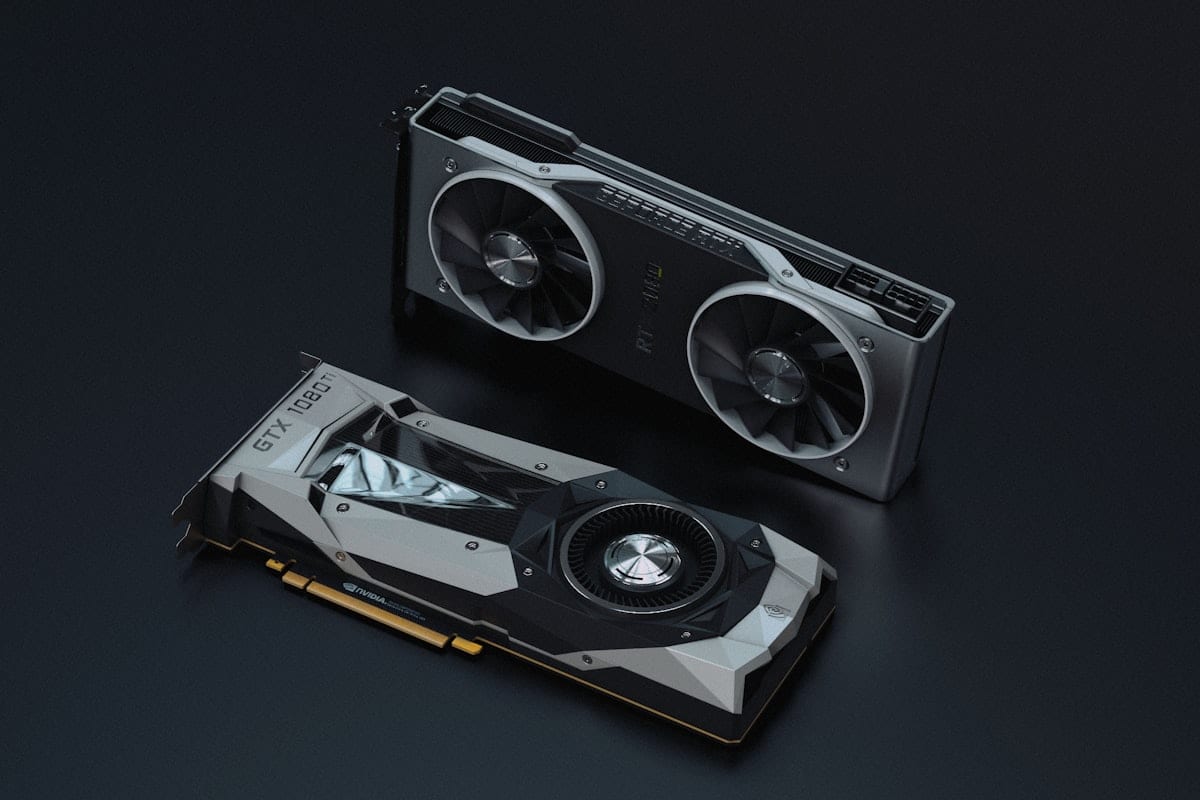
A 2.8-trillion-parameter MoE is not a home-lab model. Moonshot’s blog recommends “supernode configurations with 64 or more accelerators,” with high-bandwidth communication domains for inference efficiency (Kimi blog). The vLLM deployment recipe translates that into something more concrete: at minimum, eight NVIDIA GB300 Blackwell GPUs, or eight AMD MI355X/MI350X accelerators on ROCm, served from the vllm/vllm-openai:kimi-k3 container on vLLM 0.27.0 or newer (vLLM recipes).
The recipe documents pre-release parallelism profiles for TP8, TEP16, and a disaggregated Prefill/Decode layout, plus RDMA tuning flags and FP8 KV-cache settings, which signals that this is a workload Moonshot expects to be deployed in actual data centers, not on a single workstation. Multi-node deployments are “recommended for real production traffic” (vLLM recipes). The MXFP4 checkpoint is what keeps the model physically shippable - it is the only reason a 2.8T model can plausibly fit across eight Blackwell cards - and the quantization is native to the training run rather than a post-hoc shrink (Hugging Face model card).
For most local-AI readers, the practical takeaway is that K3 is an open-weight model you will rent or run on dedicated inference hardware, not one you will load on a desktop GPU. The MXFP4 weights plus quantization-aware training make it cheaper to serve than a naïve 2.8T BF16 model would be, but it remains a frontier-scale deployment. If you want a frame for what consumer hardware actually runs, our open-weight coverage by VRAM tier is a better map than the headline parameter count.
Read the license before you scale
The Kimi K3 License is permissive on the surface and conditional at scale. Permission to “use, copy, modify, merge, publish, distribute, sublicense, sell” the software is granted broadly, but Section 3 layers on a Model-as-a-Service (MaaS) restriction that triggers when a licensee and its affiliates exceed either 100 million monthly active users or 20 million US dollars in monthly revenue (Kimi K3 LICENSE). A separate threshold appears in the same section for aggregate revenue over any consecutive 12 months: 20 million US dollars (Kimi K3 LICENSE).
Once triggered, the licensee must prominently display “Kimi K3” on the user interface of the MaaS product. The license also defines MaaS narrowly: it means giving a third party access to inference or fine-tuning in a way that lets that third party “exercise meaningful control over the inputs, parameters, or training data” (Kimi K3 LICENSE). Carve-outs cover internal use not exposed to third parties, products with the model “solely embedded within specific features or harnesses,” and access through Moonshot’s official products or certified inference partners (Kimi K3 LICENSE).
The practical effect: an individual, a small startup, or a research lab can run K3 under the standard terms. A growing SaaS that crosses the threshold must brand the interface and, presumably, expect to negotiate.
What This Means
K3 is the biggest open-weight release on record, and that matters for the open-model track even if most readers will never serve it themselves. The presence of a fully open 2.8T reference point shifts what “open” means at the frontier, gives downstream labs a target to distill from, and gives open-coding and open-agent projects a stronger backbone. The license does not forbid commercial use outright - it conditions certain commercial behaviors at scale.
The Bottom Line
Kimi K3 is open in name and in weights, with a quantization-aware 2.8T MoE under a custom license that watches for MaaS scale. Plan for eight or more Blackwell-class accelerators, read Section 3 before you ship, and treat Moonshot’s benchmark numbers as the optimistic end of the range until independent evals land.